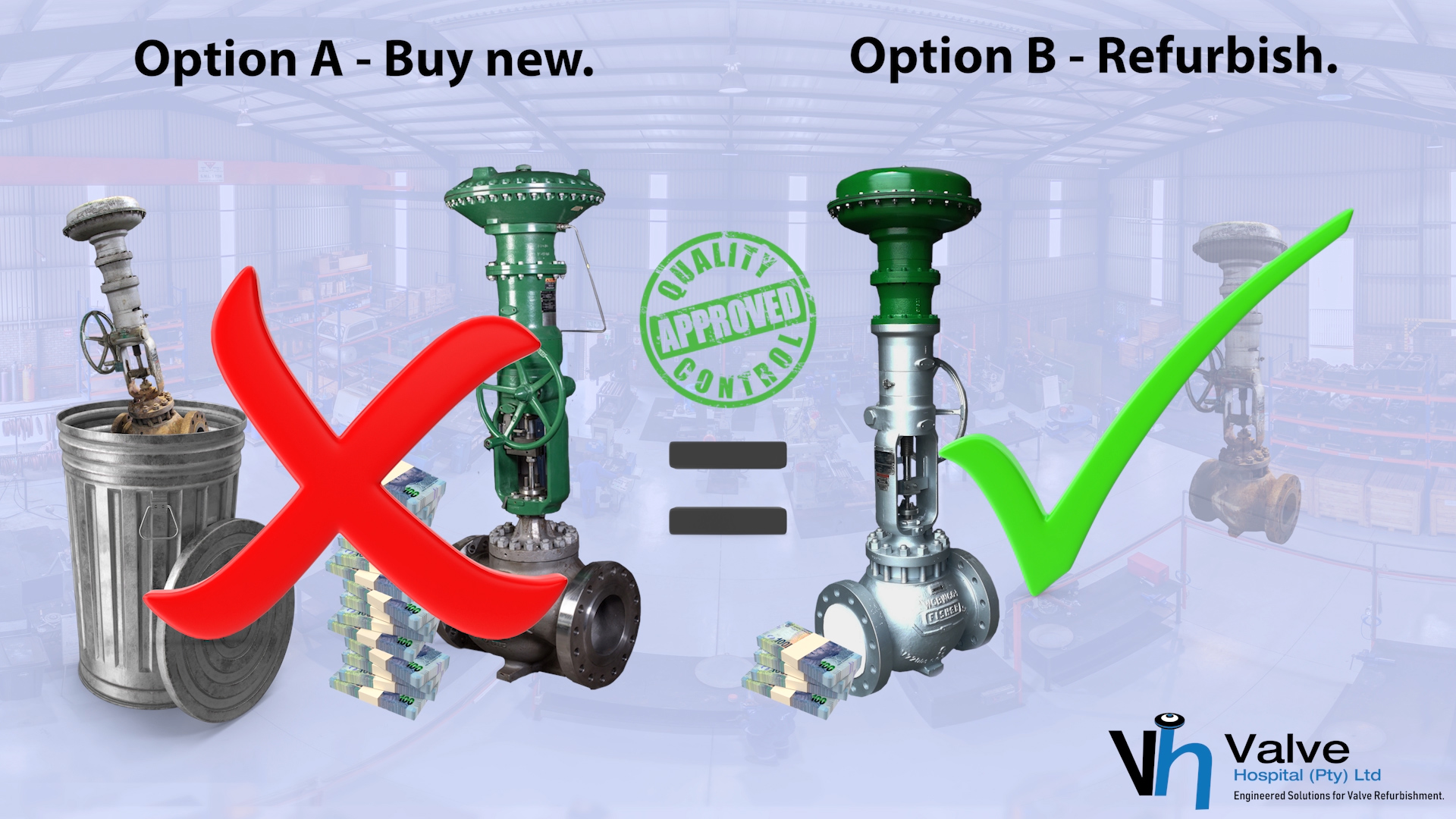
In the realm of industrial maintenance, the choice between refurbishing existing valves and replacing them with new ones is crucial for operational efficiency and cost management. Opting for refurbishment offers a myriad of advantages, from significant cost savings and extended equipment life to a reduced environmental footprint. We breakdown the pros of refurbishment below:
Cost Savings
- Refurbishing valves is significantly cheaper than purchasing new ones.
- Reduces overall maintenance expenses and capital expenditures.
Extended Equipment Life
- Increases the lifespan of existing valves through proper maintenance and upgrades.
- Delays the need for new equipment investment.
Environmental Impact
- Less waste is generated as old valves are refurbished rather than discarded.
- Reduces the carbon footprint associated with manufacturing new valves.
Reduced Downtime
- Quicker turnaround time compared to waiting for new valve procurement and installation.
- Minimizes operational disruptions and maintains productivity.
Improved Performance
- Refurbished valves can be restored to like-new condition, ensuring optimal performance.
- Opportunity to upgrade components and materials for better durability and efficiency.
Quality Assurance
- Refurbishment often includes rigorous testing and certification, ensuring reliability.
- Maintains compliance with industry standards and regulations.
Custom Solutions
- Tailored refurbishment services to address specific operational requirements.
- Flexibility to implement design modifications that improve valve function.
Resource Efficiency
- Efficient use of existing resources by maximizing the utility of current valves.
- Promotes a sustainable approach to industrial equipment management.
Supply Chain Benefits
- Reduces dependency on supply chain logistics for new valve procurement.
- Helps mitigate risks associated with supply chain disruptions.
Support for Legacy Systems
- Ensures compatibility with older systems where new valves may not be readily available.
- Maintains operational continuity in industries with legacy infrastructure.